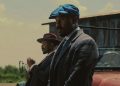



American Factory is the first film released by Higher Ground, the company started by Barack and Michelle Obama in conjunction with a Netflix deal to create movies and series for the network. Co-directors and Ohio natives, Julia Reichert and Steven Bognar have a long history of working in the world of independent documentary film. Their art focused mostly on the lives of working class people dealing with the challenges of getting by in a world that is making them into an endangered species.
American Factory falls right in line with their previous productions. The reaction to the film about the culture clash created by a Chinese company (Fuyao Glass) opening a factory in Dayton, Ohio, received great acclaim from both critics and viewers. The Academy has taken notice too, making American Factory one of its five nominees for best documentary.
In a wide-ranging discussion, we talk about the film, the response it has received, the conditions of working people in America, and a little bit about the 44th President of the United States and the former First Lady.
Awards Daily: Your first film together was A Lion in the House—that was in 2006. How did you two meet?
Steven Bognar: Well, we met in Dayton. I mean, Dayton’s a small town and there’s not a lot of film people there. And when we first become a couple we vowed never to try to co-direct anything because we thought it would end our relationship. (Laughs).
And we held onto that for a good ten years or so, and we would help each other. Julia would help me with my films, and I would help her with her films. But when A Lion in the House came along, you know, that’s a film about kids and families dealing with cancer, and not all the kids survive. Filming it took six years, and it was the hardest thing we’ve ever done emotionally. So, we kind of organically became co-directors.
AD: What drove you to make American Factory? You both have a history of focusing on labor and working people. But what was the genesis of this project?
Steven: It started in large part because we had made an earlier film in the same factory. In 2008, the GM plant in our hometown closed, and that was a factory that had employed thousands of people for generations, literally generations. People’s moms and grandmas and grandpas worked there. Those good union jobs provided a middle class life for a lot of blue collar people. It wasn’t extravagant by any means, but people could own a small ranch home. They could send their kids to college. When that factory closed, Julia and I made a short film—an HBO film called The Last Truck.
AD: I’ve seen it. It’s great.
Steven: Oh, thank you. Well, the storytelling point of view in The Last Truck is from the blue collar American factory workers, and when we started American Factory, we sort of thought it would be the same thing. But then we realized—this is an international story, and we have access to the top leadership as well as the folks on the factory floor. Then suddenly we knew we had to expand the points of view in this one.
And in the early days, when the factory first announced it was coming to Dayton, it was big news because that old GM plant had been sitting there dead and empty for years, and it was sort of a blight and a sad reminder of what we used to have in our town. And so, when Fuyao announced it was coming to town there was genuine excitement.
As for the genesis of the project, we didn’t knock on Fuyao’s door, they came to us. They had seen The Last Truck, and when they approached us, their initial idea was that they’d hire us to make a film about the rebirth of this huge dead factory. And we said well, we’ll do it, but we don’t want to be hired. We would do it if it was our film—an independent film—if we owned it, if we had editorial control, and we’d take zero money from the company.
AD: Right.
Steven: But, the company still had to take a chance with us, they had to trust us, they had to give us real access, and you know, most American corporations would never agree to that. But Chairman Cao, Cao Dewang, said let’s do it. And you can tell from the movie I hope that he makes up his own mind—he’s very decisive. He’s a maverick. And he just said: we’re going to do this. I liked that earlier film, and I had a good impression of these two Ohio filmmakers, so let’s give it a shot. And that’s how we got started.
AD: I was amazed by the amount of access you had. As a viewer, you get to see all the positivity when the factory opens, and then you see the workers learn how much they’re going to make and start comparing it to what they had. And there’s a lot of culture clash, too, that we get to see. They gave you a lot of space to show things that didn’t put them in the best light on the corporate side.
Julia Reichert: I think part of that is that when you’re there from early on in the beginning, you sort of become part of the wallpaper. You’re a part of what’s going on. And I think people just kind of got used to us. Once the chairman was on board, everyone had to go along with it — at least to a degree — all the vice presidents, the heads of all the departments. There were some times when there were meetings when they would say, “No no, you shouldn’t be in here.” I will say that the anti-union folks definitely would not allow us to film them at all. They were just hired in. They didn’t have any obligation to let us film them.
I also think that it’s one thing to get access, and it’s another thing to get trust. In other words, the chairman couldn’t say to any particular worker, “You have to be in this film.” We had to win people over. We had to make people comfortable and have them understand why we were doing what we were doing. Why the film could be important. Why it was a historic new endeavor — this huge Chinese company in the middle of a small Midwestern city. But we just hung in there and kept going, talked to people, met people in the bar nearby. We went home with people sometimes.
We also got to know some of the Chinese workers, which was a whole different story. We found some really great Chinese co-producers who came and helped us because most of the workers did not speak English at all, and we don’t speak Chinese. So these wonderful Chinese co-producers — all women by the way — they really opened doors for us. They would go home with folks. They would sit around and talk. Some of the scenes, like the scene of Wong when he talks about how he misses his kids and that he cried once, and he shows empathy for the American workers. Steve was there shooting, but it was really (co-producer) Yiquian Zhang who was talking with him with not a lot of guidance from Steve, right?
Steve: Oh no — she and Wong started talking, and she just helped him go to a reflective, intimate space, and open up. And I’m sitting there filming the whole thing for maybe an hour and a half, but I had no idea what was being said. I think he said things to us that he hadn’t said to anybody since he’d been in the States, and it was really very moving and powerful.
AD: I found Wong to be incredibly sympathetic. He was honest and seemed very open to his American coworkers in a way that some of the other Chinese were not — and that obviously cuts both ways. Some of the Americans weren’t as open to their Chinese co-workers either. He’s the character who has stuck with me the longest since I’ve seen the film.
Julia: His way of speaking was also kind of poetic and lyrical. Like when he says, “We workers lay the tracks so the train can run smoothly” and the workers clearly were both the Americans and the Chinese.
Steve: Yeah — he had a really expansive view. As the plant was not turning a profit, and as it wasn’t meeting expectations in terms of how quickly it would start to make money, everyone started getting tense. The Chinese folks had a lot more pressure put on them and then they started putting pressure on the Americans. And this honeymoon excitement period of the early days really started evaporating. People really started getting their backs up, but Wong never did. Wong always maintained empathy for the Americans as well as for the Chinese.
AD: I think the culture clash starts to show more as the film goes on, and as American leadership is replaced with Chinese leadership. The tensions really grow especially around things like regulations and standards at the factory. When stresses and real life come in, people start to change. I thought that was amazing to watch.
Steve: Oh we did too. There’s always this phase when people are starting to work together when the whole necessity of profit is less of a factor. Maybe something about capitalism kind of squashes the goodwill that could be there, and the camaraderie between working people. You saw in the film that the chairman and other leadership started appealing to the national identity of the Chinese folks. The chairman makes that speech: “We are all Chinese. We are born of Chinese mothers.” And you don’t have to look far — you can look to the White House to see that parallel here in the United States.
It’s such a missed opportunity when nationalism is used to divide working people. Because honestly, folks on the factory floor, whether they’re from China or from Ohio, they have aspirations and dreams, hopes for their kids, fears for their futures. The car needs new tires, or I have to go to the dentist but I can’t afford it. All that stuff is the same. But what we saw happening is that as things got more tense, things got polarized, and nationalism was used to divide people
AD: There’s one sequence, I think this is connected to the one you’re referring to, where one of the members of the Chinese leadership actually says “We’re better than them,” I think.
Julia: That is exactly what he said. “We’re better than them.” That was the management’s way of appealing to the pride of the Chinese, by denigrating the Americans. The vice president of a corporation here in the U.S. would never say “We’re better than them” about other workers from another country. That would just not be an American management style. But the appeals to nationalism were constant, actually.
Steve: And they grew more as the tension in the factory grew. When we started filming, we knew it would be an adventure. We knew it would be big. We knew it would be challenging, but we didn’t know where the story was going to go. We really try to keep a very open mind when filming. We had no idea there was going to be this big union battle. We filmed for three years, from February 2015 until December 2017, and we shot over 1,200 hours of footage — a lot of footage for a feature-length documentary. And as we filmed, certain themes started emerging. We would have these long dinnertime conversations after a long day of filming with Yiqian or Mijie Li, our co-producers, with our producer-cinematographer, Jeff, who is our nephew, and we’d come home and say things like, “Wow, this is globalization happening in a microcosm and we have the amazing good fortune to be on the inside of this journey.”
Julia: Right? As it’s literally unfolding. Nobody knew how it was going to turn out. I think when you’re inside of a historic shifting of tectonic plates—which I think we were in that factory—you don’t necessarily know how to evaluate it. It was in the editing room, which was a year and a half, very intensive edit, where the story really came together. We knew there was Act 1 Act 2 Act 3 before we finished the film. The honeymoon, the shit hits the fan, and the union drive.
Steve: It felt like a very organic structure.
Julia: It did. But while we were going through it, as Steve said, we didn’t know there was going to be a union battle. We didn’t know it was going to be so incredibly hot in there. We didn’t know about all the injuries that were going to happen. I think we thought it was going to be more of a cultural story.
Steven: Then larger questions started coming into our minds about the future and fate of working people. Whether it’s in China or Ohio, working people are under more pressure than ever. Meanwhile, the bosses — the billionaire class keeps growing. The security that working people strive for is less and less. The jobs in Pikeville, Kentucky, or Lexington, or Louisville, or Cincinnati, or Dayton that someone once might have worked at for 30-40 years and then retired from and then gone fishing — those are gone. That level of certainty that you’d have a job is gone. Employers will ship jobs to another country, and employees don’t have faith in their bosses anymore. All these big issues are happening for working people, and we realized we had the opportunity to articulate many of those issues with this movie.
AD: The disconnect between the management and the factory worker is really on display in American Factory. Not only for the American workers in the factory, but for the Chinese workers as well.
Steven: We were always interested in which members of leadership would walk the factory floor. We were wondering who’s out there talking to the workers? It was very telling when that would happen and how often. Or, not that often.
AD: It’s fascinating to see how the perspective of Dave Burrows (one of the American members of the management team) changes after he is fired. He goes from a person cursing Senator Sherrod Brown for mentioning unions during a speech Brown gives at the plant’s grand opening, and then after being let go, lamenting the plight of the workers in the factory.
Julia: We still see Dave and a lot of people in the film. He was let go. Fired. Kicked out on his butt, just like any other worker. He was not used to that. He was shocked when he walked in on a Monday morning and the chairman was there and he was told, “You’re out, Dave.” He did come around and realize the workers did need some kind of collective voice because they could be fired at any moment. The turnover was huge in that plant — it still is.
They had very little say about safety conditions or policies. We don’t get into this too much in the film, but policies would change all the time. They would go from getting two vacation days to four vacation days, or, you can get sick leave if you bring a doctor’s note. Then it was, if you get sick, it doesn’t matter, we won’t accept a doctor’s note. Theses things would change from month to month sometimes. So, it wasn’t just the salaries, it was also the insecurity of the work.
Dave, by the way, called Sherrod Brown. We show everybody their part of the film ahead of time because we wanted to make sure no one thought they would be fired for something they said. We had an agreement with the company that we would show them the whole film.
Steven: That’s a principle we have with every film we make — to show it to the people who are in it before it’s done.
Julia: When Dave saw his part, he immediately called Sherrod Brown’s office and apologized.
Steven: He said he was joking.
Julia: He was not joking.
Steven: Right. He was mad. You can see.
 AD: I know you’ve been making documentaries for a long time, but this took place in your backyard. Was it difficult to maintain objectivity?
Steven: We don’t believe in objectivity. If someone says, “I’m going to be objective,” I would have skepticism towards them. I think we are all subject to our personal biases, which are built throughout our lives, and how we were raised, and our demographics. We try to assume that we are going to have blind spots.
In the filmmaking process, we have to try to catch those blindshopts, and we trust our colleagues to catch us. This is where our team comes in. We may have a bias or a subtle prejudice that we aren’t even aware of. We like to think of ourselves as good, positive, progressive people, but everyone’s got unconscious biases. Yiqian, Mijie Li, and our Chinese team really helped us in the making of the film.
Here’s a very simple example: When we went to China. It was incredible — our senses were overwhelmed. We filmed a lot of footage. And when we were editing the first scene of when we got to China, we had a shot of a street vendor food market that included things like a row of roasted ducks hanging from hooks, weird (to us) fish, all this amazing stuff that was delicious, but quote en quote “exotic” to our western eyes. We had a consulting editor, Jean Tsien — she just edited Roger Ross Williams’ film, The Apollo, she’s world class — and when she saw that shot as one of the introductory shots of China, she just said, “This is a cliche. China is a modern, sleek country.” She called us on our inherent bias as westerners. So, we switched the shot. That kind of adjustment happens throughout the process.
AD: You mentioned before all the hours of film you shot on the project. I know you said themes started to reveal themselves throughout filming, but then after the shoot is over, you have to assemble it all. That had to seem daunting. Can you talk about that process?
Julia: I once put together a panel for a film festival called “Editors: the True Storytellers?” (Laughs). I got together directors with their editors to talk about how they found the story. Lindsay Utz is a great editor. When we started, we had a pretty good idea who the main characters were going to be, and then some of them turned out not to be main characters. We had done hours and hours of sit-down interviews — with the chairman, the president who got fired, the vice president who got fired, the head of HR, you name it — you’ll notice the film has none of that. Lindsay said, and we all agreed, let’s try to make this a vérité kind of film.
She spent several months looking at the footage and talking to us about the themes and what were the most important “tent-pole” scenes, and we had all those interviews to pluck from to find what we needed for the voice-overs. There’s quite a bit of voice-over partly because it’s super loud in the factory, and it’s hard to get really good sound of people talking on the plant floor. Lindsay had that guiding principle and we agreed with it. Before Lindsay, we had always edited our own films. This was new for us. She came up with so many great, creative ideas.
I remember the time — it gave me chills — she cut from the end of the celebration in China, where you see fireworks and everyone is clapping. It’s joyful — the Americans and Chinese are hugging each other and holding up a case of Budweiser. And then there’s a hard cut — not a fade, or a dissolve — to the breakroom at the factory in Ohio, of all these workers slumped over their little containers of lunch. It’s very quiet and kind of grim. That was such a great tonal change and it said so much with the edit.
AD: How is the factory doing now?
Steven: They just announced they are going to hire a hundred more people and expand to some new lines. The turnover still remains high. This is an ongoing issue. People get fired or they quit at a very high rate. Starting wages are still $14 an hour. Depending on who you ask, some people will say things are a lot better than the early days, or, they say it’s the same old, same old.
AD: So, I do have to ask you, which ‘O’ was more exciting? The Obama or the Oscar?
Steven: (Laughs) For us, the ‘O’ is always Ohio. The Oscar ‘O’ is a thrill and we’re very grateful, and the Obama ‘O’ is also incredible because both the Oscar nomination and the support of the President and the First Lady helps the film get seen. We make films hoping they will have an impact on the world and that they’ll resonate with people. But for us, the ‘O’ is always about stories from where we live — stories from our community.
Julia: It would be hard to top the afternoon we spent with the Obamas, I’d have to say. (Laughs).
AD: What was it like to be the first project released under their wing?
Steven: It’s a great honor. The film was done when they saw it. So, we didn’t get a chance to develop the film with the Higher Ground team.
Julia: It was totally finished when Higher Ground came in and Netflix bought it at the same time.
Steven: But we have come to really adore Priya Swaminathan and Tonia Davis, the heads of Higher Ground, as well as Lisa Nishimura and Jason Spingarn-Koff at Netflix. In the year since the film debuted… you know what’s funny, David? The film debuted one year ago today at Sundance. In that year we’ve gotten close to all those people. They’re wonderful and they’ve been incredibly supportive as we tried to figure out how to bring the film out into the world. We’re just grateful that Higher Ground decided to make this their first release.