


Suzanne used to say that you’re not really anybody in America…unless you’re on Tv. ‘Cause what’s the point of doing anything worth while…if there’s nobody watching? So when people are watching, it makes you a better person. So if everybody was on TV all the time…everybody would be better people. But if everybody was on TV all the time…there wouldn’t be anybody left to watch. That’s where I get confused.
– Joyce Maynard/Buck Henry, To Die For
For several years, I had been bored. Not a whining, restless child’s boredom (although I was not above that) but a dense, blanketing malaise. It seemed to me that there was nothing new to be discovered ever again. Our society was utterly, ruinously derivative (although the word derivative as a criticism is itself derivative). We were the first human beings who would never see anything for the first time. We stare at the wonders of the world, dull-eyed, underwhelmed. Mona Lisa, the Pyramids, the Empire State Building. Jungle animals on attack, ancient icebergs collapsing, volcanoes erupting. I can’t recall a single amazing thing I have seen firsthand that I didn’t immediately reference to a movie or TV show. A fucking commercial. You know the awful singsong of the blasé: Seeeen it. I’ve literally seen it all, and the worst thing, the thing that makes me want to blow my brains out, is: The secondhand experience is always better. The image is crisper, the view is keener, the camera angle and the soundtrack manipulate my emotions in a way reality can’t anymore. I don’t know that we are actually human at this point, those of us who are like most of us, who grew up with TV and movies and now the Internet. If we are betrayed, we know the words to say; when a loved one dies, we know the words to say. If we want to play the stud or the smart-ass or the fool, we know the words to say. We are all working from the same dog-eared script.
– Gillian Flynn, Gone Girl
We all know that art is not truth. Art is a lie that makes us realize the truth.
– Pablo Picasso
We are living in the age of narcissism where our celebration of self is a minute-by-minute obsession. By nature, human beings are drawn to their own image, like Narcissus himself, doomed to stare until we perish.
Rosamund Pike floats through the first half of Gone Girl like the coming of a storm churns the surfaces of still waters, then gusts of winds that hint at the chaos and destruction to follow.
Film noir femmes fatales might not survive today’s gauntlet of social justice bloggers, who are right to fight the good fight when it comes to sexist tropes in video games and in Hollywood films. But what would cinema be without them? Is art required to give all women positive role models, to tell an even bigger lie that all of us are pure of heart and altruistic?
There are so many truths to femmes fatales in the lives of women and so much truth in Amy that it’s caused so much debate among women – is she a feminist hero (no), is she a misogynist fantasy (no)? She is that rare creature born out of art who can’t be explained by any sort of type. She isn’t supposed to be a role model nor is she meant to be an invention of the male gaze. She is created by a woman — a woman who knows women.
There is no male equivalent to the kind of power women on screen can unleash when in the hands of a capable director, a willing audience, and critics who can buckle up and hold on for the ride. Once the nitpicking starts, however, all is mostly lost. Some things you just can’t overthink.
Back in 1995, we didn’t yet have a working internet. It was a tool used to communicate. I know because I was on it. We talked about movies on my group but we didn’t really use the “world wide web.” We had to wait as Mosaic became Firefox, for Netscape to actually work well but a few years later it would deb like the wild wild west – a wide open new frontier with start-ups bursting like planets from the big bang.
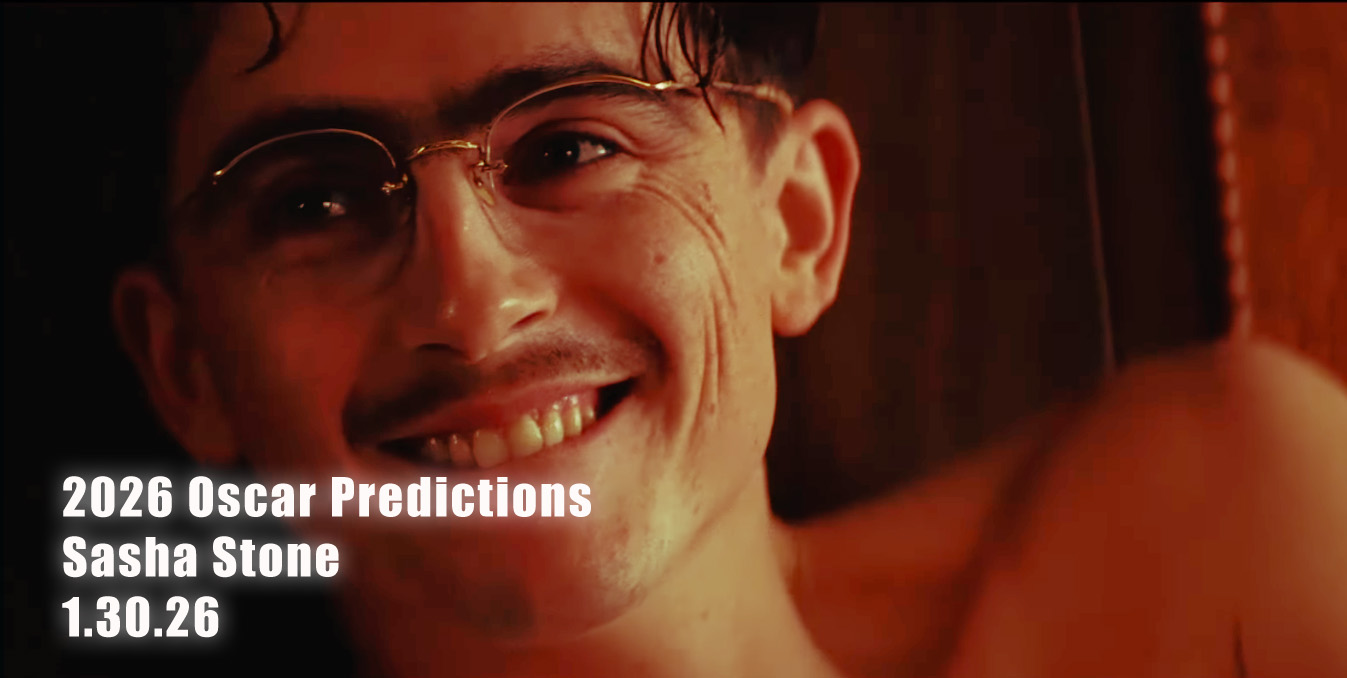
Back in 1995, when Gus Van Sant’s To Die For came out, everybody was indeed becoming famous in all of the wrong ways. Andy Warhol’s 15 minutes stretched out over lifetimes. An American Idol runner-up would win an Oscar. Another is now the most famous country western singer in America. Fame was tossed back in the bowl then refashioned for those of you watching at home. The line between being watched and being the watcher was blurred.

To Die For was seen as indictment of the media more so than a true crime version of the Pamela Smart case (watch Captivated: The Trials of Pamela Smart). But it was more than that, even more than the insta-fame ordinary citizens now had at their fingertips, provided they would be willing to sacrifice everything. It was the birth ofIt was a femme fatale for the celebrity age.
Kidman’s Suzanne Stone roped three teenagers into killing her husband but that was really only because he stood in the way of her pursuing her career goals. Every good femme fatale needs a chump and she had three willing participants. But To Die For is very much about Suzanne and the camera — Suzanne and TV — us watching the people who matter.
As the years went on, and the internet exploded, people from all over the world began their exodus to their online avatar lives. It took a while but now it feels like we’ve reached full saturation point where it is acceptable behavior to portray yourself in a dimension that doesn’t exist.
Amazing Amy, as carefully cultivated by post-90s/therapy/mood enhancing drugs, is meant to be the sum total of everything done “right.” Back in the ’90s women started their march towards perfectionism born out of the 1980s when the yuppie women went back to “work” then reflexively started staying home to be better mothers. That perfectionism of self was transferred to perfectionism of offspring because maybe if you did everything right the child would be raised with high self-esteem, the trait deemed most important by middle-class families in the late ’80s and throughout the ’90s.
Pike’s version of Amy seems to have sprung off the pages of Facebook where we have flipped our real lives onto a magic mirror, or a moving diorama that tells everyone who knows us how happy we are, how much we love the holidays, how great our marriage is.
The movie version of the book has some women mad that Amy isn’t likable anymore. That’s because a visually inclined director alters the opportunity for interpretation our imagination gives us. You see, many readers of the book found that they liked Amy. They liked her even when she tricked them into thinking she was a victim of an abusive, cheating husband. She showed them how easy it is to play up the tropes women trapped in novels often find themselves tangled in. The beauty of Flynn’s narrative is that she had no problem upending that in her adaptation, and no problem delving into the darker side of this insane sociopath also known as Amazing Amy.
How a person relates to the first half of Gone Girl says much about how they view women, marriage and adult life. Do they think women like that exist and more importantly, do they desire those women and that life? Do they feel betrayed when they figure out that they were fooled so completely?
Fincher’s reimagining of Flynn’s Amy explores this notion that appearances are everything. The only directive Fincher gave Trent Reznor and Atticus Ross, whose score for the film acts as Amy’s own inner voice, was to find that annoying music they use in spas and salons to make you feel relaxed when most of the time it does anything but. We women know that vibe all too well – the serene yoga face that tells the world we are okay. Everything is fine in here. Nothing to worry about – see, here’s a happy selfie. See how happy and content I am? I have to be happy and content because otherwise I’m a bitch. I’m a complainer. I’m nothing that you want, believe me.
Pike’s Amy is a combination of Kim Novak in Vertigo and Natasha Henstridge in Species. That beautiful face, that blonde hair, those patrician features. So familiar to the big screen both in her talent for transformation and in the clarity of her mission. Many female characters in films wander around not knowing what they want or need. Their empty holes are to be filled and then they will be complete. But Amy has no such self doubts. She is clear, precise, ruthless.
The femme fatale of the 1940s drew the male protagonist into a tragic situation that rendered him lost, helpless, broke or dead. The girl in peril whose objectives are well hidden is often measured by how sexy she was in the part, how bad she was and how much we loved her for it. Gloria Graham, Lana Turner, Barbra Stanwyck and even up to Kathleen Turner – all heels and blood red lipstick.
But Amy is a femme fatale for the narcissistic age, a vessel built on purpose for our collective projections to serve an end goal, one she never even really even wanted for herself but one that her parents already decided she was supposed to want. In the second half of the film Amy uncoils. She stuffs her face with junk food, tosses her pink fuzzy pen out of the window and carefully carries out her best laid plan. Pike’s expression relaxes from perked-up happy perfect Amy to pissed off Amy who doesn’t care anymore what anyone thinks she looks like. That uncoiling is what most women feel when they peel off their Spanx after a party or walk around their apartment without their bra on, no makeup, unbrushed hair. It’s ourselves with our on switch turned off.
The brilliance of Pike’s Amy is that she is unlike anyone’s picture of who Amy would be, probably a little like Reese Witherspoon or Rachel MacAdams. They saw her as the girl next door turned mean girl. But Pike is a cool automaton – able to switch from sweet and trusting to blank-eyed and vicious. Her best scene is when she’s all bloodied up and seated in the wheelchair. She is being questioned by the detective (Kim Dickens) who is about to nail her on an inconsistency. Pike barely flinches but just enough for us to see the flicker in one of her flawless eyes. She switches gears instantly and says exactly what she needs to say to shift focus and lay blame.
Pike’s femme fatale is less a good girl turned bad as she is one who didn’t fit in this world from birth. The complete absence of stereotypical female emotions toys with viewers expecting to see a woman they need to like. A similar dynamic is played out in Jonathan Glazer’s Under the Skin with Scarlett Johansson playing an alien playing a woman. She is acting the way she thinks people think women are supposed to act. She is the sum total of her body parts – lips, tits, ass — but like Pike’s Amy, she doesn’t act on intellect but rather, on instinct.

While Under the Skin is a deliberately opaque sci-fi film, and Gone Girl is an entertaining, if a bit unsettling, thriller, both depict a female character whose internal self does not match the external. Beauty is then the definition of a mask. The iconic status beautiful women enjoy is, here, a construct.
It takes a while for the full impact of what Glazer is trying to do with Under the Skin and to do it he needed the infamous body of one of the most famous bodies in the world – Johansson’s. Because what the film ultimately says is that there is so much more under the skin, so much we don’t see and couldn’t imagine. Under the Skin is not an easy story to figure out – it is open to interpretation, no doubt, but I saw it as a woman who wants to be a woman people want. Like Amy, this too is a false portrait of the male gaze upended.
Another wonderful rumination on the notion of the other self, the idealized woman is Robin Wright’s character in The Congress, where she plays an aging actress playing herself who signs over her life to her younger avatar. In the imagined animated world people can assign themselves completely alternative selves, or avatars, while real life is revealed to be a place of pain and suffering. But she loses everything that matters in doing this, her image being the only thing that survives in the end. Like Under the Skin, The Congress is open to interpretation and not an easily digested film in the least bit. But Van Sant, Glazer, Folman and Fincher are getting at something few filmmakers do – circling around the changing times, the images of ourselves as we’d like to be, and revealing what we still want from those beautiful faces on the big screen.