

Things people say make news now because so many people are afraid to say what they really think, lest their comments go viral. A Danny Boyle comment did go viral but not because it was politically incorrect, but for the opposite reason:

He’s right that there is no way the film would be made today. It would never have been funded. It would have never been celebrated. It would have never won Best Picture. But he is wrong that it “should be this way” and that people like him (white dudes) should never be allowed to make movies that take place in India. So goes the death of art. A more “authentic” Slumdog would not be a better movie. You could tell the same story in the slums of Victorian England, and it would work just as well. It works because it’s a classic “hero’s journey” and a deeply moving love story.
This only goes one way. No woman can play a trans woman, for instance, but plenty of heterosexual men can play gay men. Black actors and actors of color are routinely swapped in for traditionally white characters, and no one says a thing. So what is it really? It’s not art, and it’s not depicting reality. It is DOGMA. It is ideology masquerading as art that always delivers the same message.
But if we did follow Danny Boyle’s mindset, that would lead back to segregation. White people can only tell white stories because that is more authentic. Men can only tell stories about men, and gay men can only tell stories about gay men, and on and on it goes.
Unfortunately, we don’t raise healthy, robust minds anymore. We coddle our young, tell them only what they want to hear, tell them art must align with our ideology OR ELSE, and put the most ridiculous trigger warnings in front of films and books. We have killed art and the whole point of it by forcing it to be a corrective or a magic mirror back to society, just so that uptight Oberlin grads don’t throw fits on the pages of The Atlantic.

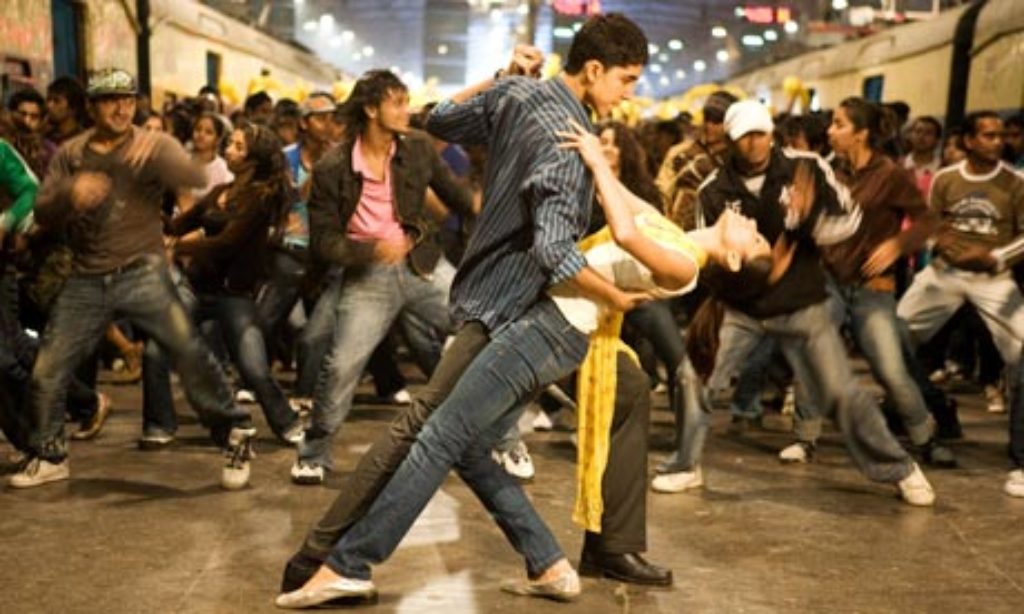
Slumdog Millionaire didn’t win Best Picture because it took place in India. All that did was set a time and place that made the characters instantly sympathetic: living in a poverty-ridden country and falling in love. We watch one man’s quest to find and rescue the love of his life. Everything she goes through, and his earnest attempts to save her is a story as old as time and it’s not only one we all respond to, but I defy you watch these scenes and by the end, not tear up watching the two of them finally come together.
The book was written by India-born Vikas Swarup, and co-directed by India-born Loveleen Tandan. That shows he was already sensitive to the idea that he was a white director making a movie about a world he did not know. But that’s why it’s good. It’s an outsider’s view of a world most Americans didn’t know either.
I wasn’t the greatest fan of this film back in 2008. I was more of a Benjamin Button girl. I was annoyed by how people fell for it and how it won everything. The movie ended my friend David Carr’s (The Carpetbagger) interest in the Oscars because it was such a boring year since Slumdog was winning everything, even SAG ensemble. But looking back on it, the movie just works. It works because of the writing, the directing, and the music.
Rewatching it a few years ago reminded me why it won. It is a moving, universal love story — a “hero’s journey” that made us feel something. There is no shame in that. Without Danny Boyle’s direction, with that incredible score, without the great performances of the two leads, it would not have been so good. It deserved to win Best Picture for that and many other reasons.
We can complain about Gone With the Wind for the same reason. Call it racist and not keeping up with social justice and our changing views on race, but that doesn’t make Gone with the Wind any less of a movie. Of course, it would not get made today in the same way, but so what? It reflected the points of view of the time.
Back in 2008, Barack Obama was newly elected. The world was just turning on to iPhones, and Facebook and Twitter were in their infancy. Back then, no one talked about “cultural appropriation,” but that didn’t mean Slumdog Millionaire was without its criticisms. It was accused of being “poverty porn” or “poverty tourism” for the ultra-rich to tell a love story to make themselves feel better about their lives.
Indians protested the film because they did not like being depicted as “slum dogs” and found it offensive. Back then, The New York Times found people to refute those accusations.
One writer, however, did not hold back:
In India, dogs are rarely the beloved pets they are in the United States — instead they are widely considered to be unclean, inauspicious and, in some cases, unsafe. So it was unsurprising when the use of the word “dog” in the title of “Slumdog Millionaire” aroused controversy in India, sparking a flurry of media attention and providing a platform for the consternation of several slum activists, Bollywood actors and members of the international press.
These unlikely allies argue that the film portrays India, and residents of the Dharavi slum where it was shot, in a negative light. Alice Miles of The Times of London goes so far as to suggest that the film is an example of “poverty porn” — where the suffering of the Indian poor is served up as a perverse form of First World voyeurism.
The film’s screenwriter Simon Beaufoy claims he coined the word “slumdog” without meaning to offend; he has said in interviews that he merely “liked the word.” His use of the word “dog” was a problematic choice he made arbitrarily, and clearly without doing enough research. But the outcry is perhaps more indicative of deeper rifts in India’s tumultuous struggle to establish itself as a modern power.
In the film, the director Danny Boyle uses a grab bag of recognizable Indian symbols — the Taj Mahal, cricket, Amitabh Bachchan — with which to make his film accessible and entertaining to Westerners. The Dharavi slum as depicted in the film, indeed the very notion of poverty itself, is merely one of these tropes. Choosing to represent squalor as colorful scenery may be in questionable taste, but it’s hardly pornography.
More troubling than Mr. Boyle’s facile characterization of life in Asia’s largest slum is how the national argument over India’s representation in popular culture seeps into the urban solutions proposed for Dharavi, notably a new redevelopment plan which would demolish the slum and relocate some of its residents to a complex of towers. This may be seen as an effort to put India’s best foot forward, a sentiment that goes hand in hand with Bollywood’s glossy view of reality. But the plan has little bearing on how Dharavi actually works; a complex structure of linked marketplaces, small factories and informal businesses. If the uproar over the film’s title can be channeled toward improving conditions in Indian slums — informed by the real-life needs of its residents — then “Slumdog Millionaire,” clichéd or not, will have been a success worth lauding.
I guess I don’t blame Danny Boyle for doing what so many in Hollywood have done, from the Academy to the greatest living filmmakers. Once he becomes “toxic,” he won’t get any movies made at all. That is the truth about what Hollywood has become, and because they’ve set it up this way, they won’t even allow movies to be made that expose them for their hideous, self-serving, cowardly hypocrisy.
It’s not Danny Boyle’s job to fix society. We would not be better off if Slumdog Millionaire had never been made. We are not a better society without art, even if deemed “flawed.” We are better off with so-called “problematic” movies than without them. If we are strong enough to survive art, then we’re not strong enough to survive anything.