


When I first started this site, way back in 1999, one of the reasons was that my film snob friends didn’t think great movies could win Best Picture and that all of the movies that did win were bad — those cited would include Driving Miss Daisy, Forrest Gump, The English Patient, etc. Then, I would continue the trend with movies like Crash and The King’s Speech. The truth is that none of them are BAD movies. If they were, they could not win on a consensus vote of thousands.
It’s even hard for bad movies to get nominated. Most movies that get in, even with ten, are good films. They are well written, well-directed, and well-acted. The question then becomes, can they stand the test of time? That is a test most movies nominated and win tend to fail. The reason is that Oscar movies are time capsules. They reflect a moment in time and very rarely escape their time. Even a movie like The King’s Speech was a movie of its time because it wasn’t really about King George. It was about a society that just elected the first Black President and was more interested in elevating a compassionate man with a disability that, say, the little punk who invented Facebook.
What the movies say about the voters is what Oscar movies are now. There was a long period where they spoke for the general public, too, but those days are long gone. Most Best Picture winners up through Gladiator, I’d say, are movies most people know and remember. Has my 27 year-old daughter ever seen Gladiator? No. Is she interested in watching it? Not really because that movie also spoke to its time, the turn of the millennium, heralding the arrival of a new Roman-like empire online.
The lazy way of talking about this always lands on Saving Private Ryan vs. Shakespeare in Love. But there is no doubt in my mind that Shakespeare in Love is the better film. The script is better. The story is better. I remember it and think about it even today. Saving Private Ryan is a movie almost no one remembers, story-wise. They remember the first 45 minutes of it and indeed, they are brilliant. But then it becomes overly sentimental — and that works for some but it can’t match the first part.
Shakespeare in Love, by contrast, isn’t just a silly love story. It’s a swooning, romantic love story worthy of inspiring a timeless play like Romeo and Juliet. But the film and the story is full of brilliant observations about human nature, about writing, about fame. So anyone who tells you that’s a bad movie that won Best Picture, know this: they have no idea what they are talking about.
Gwyneth Paltrow absolutely deserved to win the Oscar, even if Cate Blanchett was equally great. But the heart wants what it wants and that year, Academy voters fell in love.
My kingdom for any movie this good now.
Shakespeare in Love was seen as a “Harvey Weinstein whiz kid” move. There was a whisper campaign to take down Saving Private Ryan, so the story goes. It emerged at the very end of the year, shocking everyone with a surprise win. But that doesn’t make it a bad movie. If anything, winning the Oscar is the only reason anyone would think of it that way.
We don’t often discuss the Oscar curse, but it is real. The minute a movie wins, there is a tendency to feel deflated and root for the movies that didn’t win, no matter how great the winning film is. But it’s also true that some years the winner for Best Picture seems inexplicable. I always think about 2014 when it was Birdman vs. Boyhood. That was the year I really noticed just how niche the awards race had become because they didn’t nominate the only movie from that year that people still talk about and remember: Gone Girl.
But that doesn’t mean Birdman is a bad movie. And in its own way, it did speak to the time — maybe not the time for everyone, but certainly for a generation in Hollywood that was about to be retired and replaced: old white guys.
Birdman spoke to what was the majority of Academy members at the time. They were mostly actors and going to war with the rise of superhero and IPs at the time. Like look at the box office for 2014:

And those movies weren’t even making as much money as other years. There was a clear disconnect between the movies people paid to see and the kinds of movies Academy voters wanted and demanded. So they were hand-delivered on a silver platter, with the white-glove treatment. Here you go, just what the doctor ordered, a way to pretend nothing had changed.
It wasn’t that the movies nominated didn’t make money — some of them did, like American Sniper and The Imitation Game. However, it also didn’t matter if they did, even as far back as 2014. That would worsen and worsen as we head into the transformative year of 2020 when theaters emptied out because of COVID and the Great Awokening changed everything about Hollywood.
The good was that marginalized people would now be given opportunities in front of and behind the camera. The bad was that there would be mandated dogma ordered for all films, especially those aimed at the Oscar race.
In a way, it’s still about the hand-delivered, hothouse flower designed to please the Academy voters. It’s just that what they demand has changed.
And now, the world of Best Picture building is so small and insular that it operates largely without the public having any clue that these movies even exist. Even now, the chatter around the Oscars revolves around movies that haven’t even been seen yet that are somehow supposed to be frontrunners already. Like, what is that?
Some pundits have resisted that inclination, like Anne Thompson and Scott Feinberg. But most of them — myself included — go along with it for the gaming aspect of it. But it also means that the movies don’t even need a life outside of this game we play every year.
A film like Jay Kelly, which hasn’t yet been seen but is at the top of some bloggers’ lists, is a Netflix movie, which means it will be carried through the season like a precious egg. The chances of it not making it into the Best Picture race are very slim. It would have been REALLY BAD to not make it in. Chances are it won’t be bad. There is a chance it will be great. But most likely, it is good, it gets in, and no one ever thinks about it again. That’s just the way it goes now, sad to say.
Because there are ten slots to fill, and not that many great movies, it’s not hard to predict what will go in based on the studio, the publicist, the filmmaker, and the subject matter, give or take a catastrophe or two.
The question of whether bad movies win Best Picture becomes almost irrelevant. If critics and bloggers now decide, then they will pick the movies they think are good. So, who will say they aren’t good if no one else ever sees them?
I don’t think Crash is a bad movie. I thought Everything, Everywhere All At Once came close to being a bad movie – at least for me – but it’s saved in its last few moments and wins points for pure daring. Like all Oscar movies, it was voted on by thousands of people — and I am not sure a really bad movie can pass that test.
The reason most of us thought Crash was bad had more to do with the loss of Brokeback Mountain than it did Crash. It seems to me it’s gotten a bad rap all of these years later, and I feel the same way about Green Book. The lazy group thinks that condemning these movies hasn’t yielded better ones, in my opinion.
What they are is a reflection of an Academy that was compassionate and empathetic about racism. That’s what drove the wins for these films. We called it “white guilt” back in 2014, but no one would dare say such a thing now, just as they would never accuse Hollywood of tokenism now because the activists have essentially decided how things should be.
I also don’t think The Blind Side is a bad movie just because society moved on and decided it was “racist.” It was well-intentioned and sweet. I could gain more points if I trashed it as a terrible movie, but it worked. Whatever else you think about it, that movie worked — just like the one everyone also hates, The Help. That movie worked too — as sappy and cringe as it might seem today.
The curse of a film winning Best Picture is one of the unintended consequences of making a good movie. Anora is a great movie – but after it won, there was the usual chatter about how it wasn’t good and shouldn’t have won. But Anora reflected time and place well. It shows a voting body less inclined toward films about social justice or politics and more about truth in storytelling. Perhaps Anora’s win is a sign that the pendulum is indeed swinging toward films that are just good stories.
Whatever wins Best Picture, it has to win over a consensus vote among thousands of like-minded industry voters. THOUSANDS. That means it can’t be a really bad movie. It has to be at least watchable. People have to be able to understand it. It can’t be something you have to watch twice before you can fully absorb it.
But those kinds of movies tend not to last long. Because you don’t have to watch them twice, you mostly don’t ever watch them again. They exist in time as an experience, a memory. But the truly great films never leave you alone. They haunt you. They make you think. You laugh about them. As you age, their meaning grows deeper. The greatest films stay with you because they capture something that you’ve never seen or heard anywhere else – a character, an ending, a fight, a love story.
Movies that captivate me are ones I don’t quite understand at first – they tickle the edges of my consciousness so that I must reach back into them again and again for their true meaning to come out. For instance, in Life of Pi there are two stories told at the end. One is about the tiger and one is about the true story of what happened. The question is asked, which story do you prefer? The answer, the one with the tiger. The message: and so it goes with God.
That ending, that question, has stayed with me for years because of my own thoughts about religion, how they’ve changed as I’ve gotten older, what it means to need the better story just to get through the misery of life. Life of Pi did not win Best Picture because Argo did. Argo captured a moment and became a memory. Life of Pi could not have captured the consensus. It’s too odd and complicated.
But Life of Pi lives on in my mind and my heart. That’s the difference between a good movie and a great one.
Predictions
Not much has changed for me in a week. The predictions are mostly the same because all we’re doing is having conversations about things we don’t know. The only thing I know is that Sinners and Sentimental Value are strong contenders for Best Picture. Everything else is guesswork at this point.
Picture:
- Sinners – wide release
- Sentimental Value – Cannes
- Wicked for Good – wide release
- A House of Dynamite – Venice
- After the Hunt – Venice
- Hamnet – Maybe Telluride
- Jay Kelly – Venice
- Springsteen: Deliver Me From Nowhere –probably Telluride
- The Testament of Ann Lee – Venice
- Ballad of a Small Player — Venice
- One Battle After Another — wide release
- It Was Just an Accident — Cannes
- Frankenstein — Venice
- The Roofman — Toronto
- The Lost Bus — Toronto
Director:
- Ryan Coogler, Sinners
- Joaquim Trier, Sentimental Value
- Jon Chu, Wicked for Good
- Luca Guadagnino, After the Hunt
- Kathryn Bigelow, A House of Dynamite
- Guillermo Del Toro, Frankenstein
- Paul Thomas Anderson, One Battle After Another
- Yorgos Lanthimos, Bugonia
- Chloe Zhao, Hamnet
- Edward Berger, The Ballad of a Small Player
Best Actor:
- Jeremy Allen White, Springsteen: Deliver Me From Nowhere
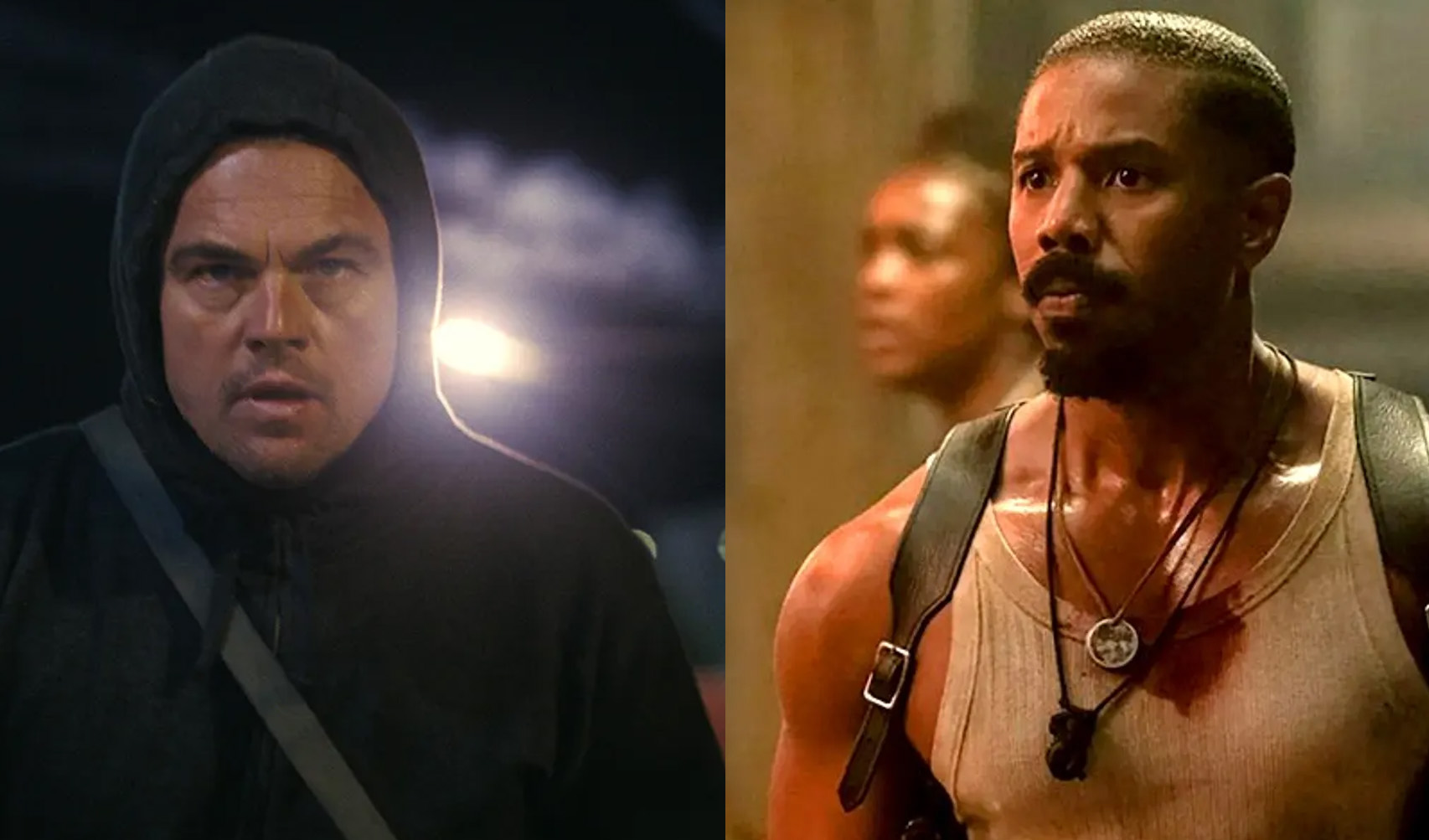
- Michael B. Jordan, Sinners
- Timothee Chalamet, Marty Supreme
- George Clooney, Jay Kelly
- Colin Farrell, Ballad of a Small Player
- Stellan Skarsgard, Sentimental Value
- Oscar Isaac, Frankenstein
- Matthew McConaughey, The Lost Bus
- Leonardo DiCaprio, One Battle After Another
- Paul Mescal, Hamnet
Best Actress:
- Amanda Seyfried, The Testament of Ann Lee
- Renate Reinsve, Sentimental Value
- Cynthia Erivo, Wicked for Good
- Julia Roberts, After the Hunt
- Jessie Buckley, Hamnet
- Emma Stone, Bugonia
- Jennifer Lawrence, Die My Love
- Rebecca Ferguson, A House of Dynamite
- June Squibb, Eleanor the Great
- Tessa Thompson, Hedda
Best Supporting Actor
- Miles Caton, Sinners
- Andrew Garfield, After the Hunt
- Jeremy Strong, Springsteen: Deliver Me From Nowhere
- Adam Sandler, Jay Kelly
- Shia LaBeouf, Henry Johnson
Best Supporting Actress
- Ayo Edebiri, After the Hunt
- Hailee Steinfeld, Sinners
- Ariana Grande, Wicked for Good
- Jennifer Lopez, Kiss of the Spider Woman
- Elle Fanning, Sentimental Value
Original Screenplay
- Sinners
- After the Hunt
- Jay Kelly
- Bugonia
- A House of Dynamite
Adapted Screenplay
- Hamnet
- Springsteen: Deliver Me From Nowhere
- The Ballad of a Small Player
- Bugonia
- The Life of Chuck