


How much do critics matter? How much do tastemakers matter? That’s what we’re about to find out as we head into the fertile phase of the Oscar race. It is a window of time when buzz is built up by people favored by publicists to carry the precious egg through the race. For movies that are the real deal, it isn’t hard to guide them. But for movies that are edge cases, where liking them is a matter of a specific kind of taste, those are the kinds of films publicists need bloggers for, and it all happens right now.
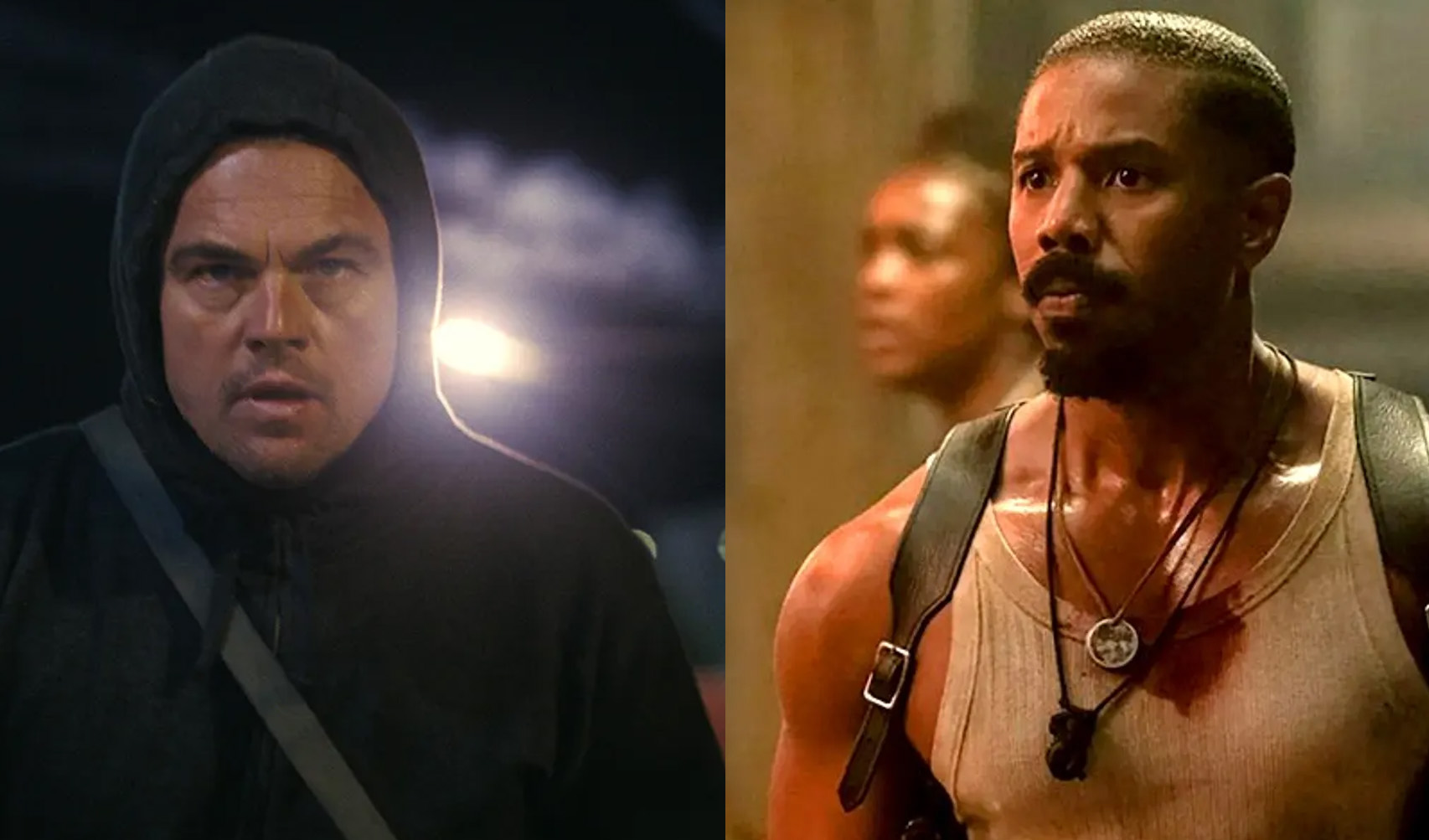
Bugonia and Jay Kelly hit Rotten Tomatoes. Jay Kelly is struggling with that crowd. They’re appreciative but not over the moon. Those who prematurely predicted it to win Best Picture were getting ahead of themselves. Noah Baumbach isn’t exactly a general audience crowdpleaser, even among the rarified air of the Venice Film Fest crowd. It’s a movie that some people will like — think: those who listen to NPR.
It might also draw in some Adam Sandler fans, I figure, but this will be a rough season for George Clooney, or a great season, depending on how political he wants to get. Jay Kelly appears to be a movie, more or less, about the worth of a movie star in his twilight years, or on the verge of it.
The harshest review came from Peter Bradshaw, who really did not like the movie. Not just “didn’t like,” but hated. His heading:
Venice film festival
The affable star plays an affable star assessing his life and career at a Tuscan film festival in a wildly sentimental and self-indulgent piece of cine-narcissism.
Oh boy, we’re not getting off to a good start. Then closes it this way:
So Baumbach’s film pirouettes into territory already trodden by Fellini’s 81/2and Woody Allen’s Stardust Memories, but smothers everything in a bland, Tuscan sunshine-syrup. The sharp realisations about the cruelty of show business are cancelled by gushes of Hollywood self-adoration and self-forgiveness and jokey non-comedy.
Finally, Kelly watches a sizzle-reel of his roles at the festival ceremony, and of course these are clips of Clooney’s actual films (no ER though). It is an unbearable imposition on the audience’s affections, but there is a tear in Jay’s eye. Cine-narcissism like this is always tiresome, and it isn’t any more palatable in a European setting.
Does this mean Jay Kelly can rally and find its footing? Maybe. The rest of the reviews are in the “it’s okay” realm, with an RT score of 77%. The problem with this movie, I say, having not seen it, is that Noah Baumbach is not the kind of director I would expect. This is Rob Reiner or Ron Howard territory. Baumbach is sharper, edgier. And in that space, he’s good at what he does. But it would be hard to be alongside shooting star, Greta Gerwig, that’s for sure. This is an industry that elevates her and isn’t particularly invested in elevating a Noah Baumbach, or any white man.
Bilge Ebiri likes this more, writing:
Clooney plays it all so cool that he and the movie both sneak up on us. This is the role of a lifetime, on many levels. And he delivers the performance of a lifetime.
And for those who are expecting Adam Sandler to run away with the season — maybe. Maybe not:
Of these, Ron is the one closest to Jay, and he’s clearly done everything in his power to help his biggest client rise in the industry and stay there. Those expecting a big alpha-dog performance from Sandler might not be ready for just how much he admirably underplays the role. Ron has relatively little personality because he’s allowed himself to be subsumed by Jay. “You’re Jay Kelly, but I’m Jay Kelly, too,” he tells Jay, but it’s clear that the actor doesn’t see it the same way. Ron betrays little emotion, in part because he’s just so damn busy; his poker-faced, can-do competence is clearly his greatest asset. He’s a constant fount of reassurance and behind-the-scenes control, and he never seems to rest.
Meanwhile, Emma Stone and Bugonia are receiving better reviews, with a solid 100% at Rotten Tomatoes right now. However, if you read the reviews, they’re mostly of the form, “This movie is really OUT THERE, but that’s what is fun about it.”
Here is how Owen Gleiberman writes about it:
But all of that would make for a standard and rather reductive thriller. As much as he’s in a rage over what happened to his mother, Teddy is also a left-wing nihilistic eco-terrorist conspiracy wingnut, a young man who has soaked up every critique of capitalism and denunciation of corporate-political culture that exists. Is he a crackpot? It would seem so, though he’s a highly intelligent and enlightened one. Much of what he says about the new global authoritarian corporate culture — the new world disorder — is true. Yet he also appears to be a mentally ill extremist. He has abducted Michelle because he’s convinced that she’s an alien. That’s why they shave her head; Teddy thinks it’s through her hair follicles that she communicates with her alien overseers. And, in fact, his plan is to force her to talk to her alien “emperor” to make the world right again
And:
For a while, with Michelle imprisoned in the basement, and Teddy tormenting her with his righteous wacked conspiratorial obsessions, “Bugonia” suggests a kind of Antifa-vs-.the-corporation version of “Misery.” Yet the movie works by toying with our sympathies in devious and unpredictable ways. At first, the whole feel of it is intensely cold-blooded, since we seem to be watching the face-off of two characters we staunchly disapprove of, though in different ways. Michelle the lying CEO, who treats her workers and the world around her like garbage (but pretends otherwise), deserves some kind of comeuppance. As for Teddy the alt-left extremist desperado, he is also, in his way, contemptible. His paranoid vision is an extension of the very toxicity he says he’s against. And he’s fighting the power by trashing the rule of law to a degree that most us wouldn’t support.
And he writes:
As terrific as Stone is, though, it’s Jesse Plemons who gives the film’s most extraordinary performance. His desperate, lacerating Teddy is a character who has ruined his own life, who has martyred himself out of his devotion to The Truth. Yet he’s got a handle on where the world is heading. And the more that Plemons lays him bare, the more we connect to the tragedy of Teddy’s masochism. In a way, he stands in for an entire generation. This is acting on the high wire.
And he closes it this way:
We want to see Michelle escape, because that’s part of the logic of how movies work. “Bugonia” turns into a wild and galvanizing suspense thriller of action and ideas; it’s a movie that encompasses blood-splattering suicide, death by antifreeze, and a cop who was once a sexually abusive babysitter. We can sense that Teddy’s master plan is doomed. Yet Plemons’ great performance is sealed by the film’s crowning joke, which I won’t reveal, though let’s just say that it shines a new light on Teddy’s madness (and Michelle’s heartlessness). And even as we’re giggling, or maybe just shell-shocked, the film transitions into something deeply cosmic and humane. It leaves us stunned by what happens to the world these two have been fighting over, by what a powerful and vulnerable place it is.
It seems to me that Bugonia is engaging with deeper ideas about our modern world, like Eddington, and it might end up being a film that’s worth diving into. I won’t know, of course, until I see it for myself.
How Political Will Telluride Get?
Ask E. Jean (Carroll) will play at Telluride, which we already knew from Scott Kernen, who announced it on last night’s podcast. Carroll is a hero on the Left, having sued Trump for defamation and won something like $80 million for it. I personally never bought the story. I think it’s pure fantasy. That’s just my opinion. Don’t sue me. Either way, having her there sets the tone for just how political and partisan Hollywood still is. She’ll receive a lot of press because Trump is a magnet for publicity. He will be the biggest star at Telluride who isn’t even there and has no idea what it even is.
Imagine, for instance, that when Bruce Springsteen arrives in Telluride and stands at the mic, he’ll be making sweeping statements about the “dictator” and “authoritarianism.” That seems like a given. If George Clooney makes it to the mountains of Telluride, I expect he, too, will “get political.” However, we don’t know yet if Bruce Springsteen is confirmed to appear. He’s not listed, but could make an appearance as a special guest.
And then, of course, there is Ken Burns, who is a Telluride regular. He is bringing the American Revolution. Like Springsteen and Clooney, he has often been quoted spouting the extreme hyperbole the Left is so comfortable with now, that it’s the end of everything, we’ll never come back from this, America has been overtaken by Nazis.
The subject of defunding PBS and NPR will also be a hot topic, with Burns’ latest series set to air on PBS. It will undoubtedly help drive donations to both sites. I just wish that the world of these filmmakers and storytellers could be shared with the rest of the country, but they never are. They exist in their own rarified bubble. Maybe that was always true. Maybe it’s just the democratization of the internet that makes us all feel like we want to be on the same level.
Their films, speeches, galas, and events typically reflect a singular worldview, one that is shared by nearly all members of the film industry. If you want to participate, you have to be one of them, conform, or shut up entirely. The reason I could never shut up is that I could not accept that the Left, which I grew up with as the side with freedom of thought and speech, would have people so afraid to say what they thought. I couldn’t go along with it and still can’t, no matter what.
Other than Trump, who will loom large as always, Palestine will likely be a hot topic. Yorgos Lanthimos was wearing a Palestinian flag. Many of Hollywood’s finest have taken on the cause as the current issue that matters to them.
The film Cover-Up, by Laura Poitras, will screen at Telluride. It’s about the life of Seymour Hersch, who is less of a problem now that Joe Biden is out of office. Back then, Hersch was considered an “enemy of the state” for some of what he’d written about Biden’s policies with Russia. From the Venice program:
Cover-Up is a political thriller that traces the explosive career of Pulitzer Prize-winning investigative reporter Seymour Hersh. Urgent and deeply reported, Cover-Up is both a portrait of a relentless journalist and an indictment of institutional violence — revealing a cycle of impunity in the U.S. military and intelligence agencies. Drawing on exclusive access to Hersh’s notes, and interweaving primary documents and archival footage, Cover-Up captures the power and process of investigative journalism.
Reporters also love to bring up politics, especially when it comes to Trump. It’s instant clickbait. I expect they will go there whenever they get the opportunity, and having attended Telluride for many years, I can assure you that all of them share the same mindset. To them, it really is an “us against them” kind of ideology. Half the country that voted for Trump is not considered. All they know is that something was taken from them — THEIR COUNTRY, their democracy, etc.
Bugonia looks strong, Jay Kelly muted.
So far, it looks like Yorgos Lanthimos might have the best shot here to bring in a Best Picture, Best Director contender. If the acting is this strong, it’s probably a done deal. That Clooney was ill and could not make the press conference for Jay Kelly hurts the publicity a bit, but the muted reception hurts it more. I guess we’ll see what they make of it in Venice.
That’s it for today.